
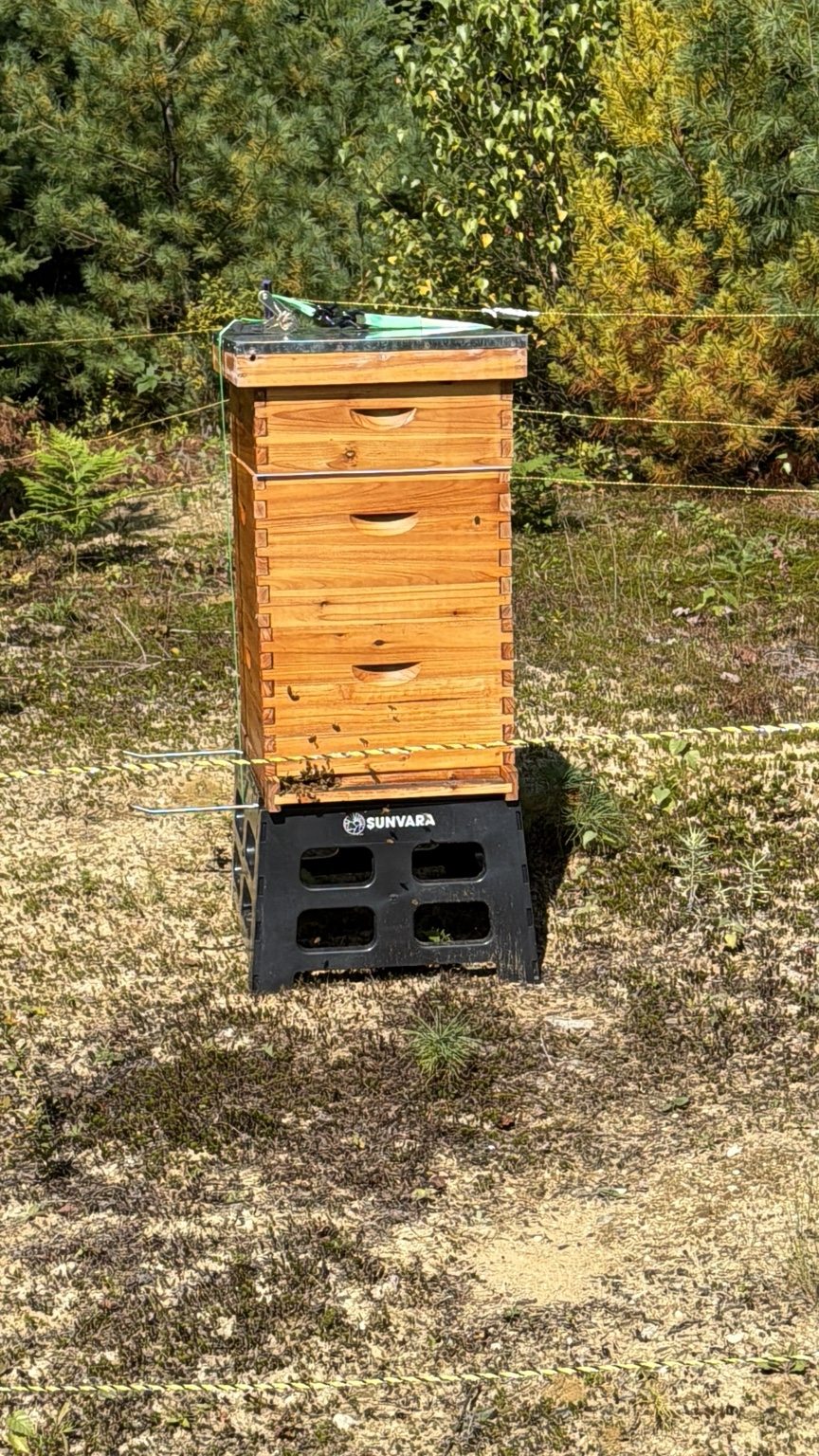
In April we added another kind of livestock to Legacy Acres—although these new residents were small enough to fit thousands of them into a couple of wooden boxes.
We started keeping honey bees with two hives of North Country bees. I’ve been fascinated by how much work goes on inside a hive, and how quickly you realize that having bees and understanding bees are two different things.
A colony is not one busy insect
A honey bee colony works as a group. Worker bees tend brood, build and maintain comb, collect water, nectar and pollen, and defend the colony. The queen’s central job is egg laying, while drones have a reproductive role. The balance changes with the season, weather and resources available.
Beekeeping means learning to watch for signs rather than assuming everything is fine because bees are flying at the entrance. What’s blooming? Is the colony building up? Does it have the space and food it needs? Are pests and disease under control?
Living with the landscape
Our farm is surrounded by forest, fields, and the plants that make up this part of northern New Hampshire. Honey bees are one part of the larger pollinator picture here. Native bees, flies, butterflies, moths and other insects also do important work in the landscape, and we want to make room for them.
I won’t pretend we knew everything in April. We didn’t. Starting with two hives has been an education, and I expect that will continue for a long time.
One thing I already know: the label on a honey bottle doesn’t show all the work that went into making it possible.
We’re excited to share what we learn—both the good moments and the ones that remind us why beekeeping is never boring.