
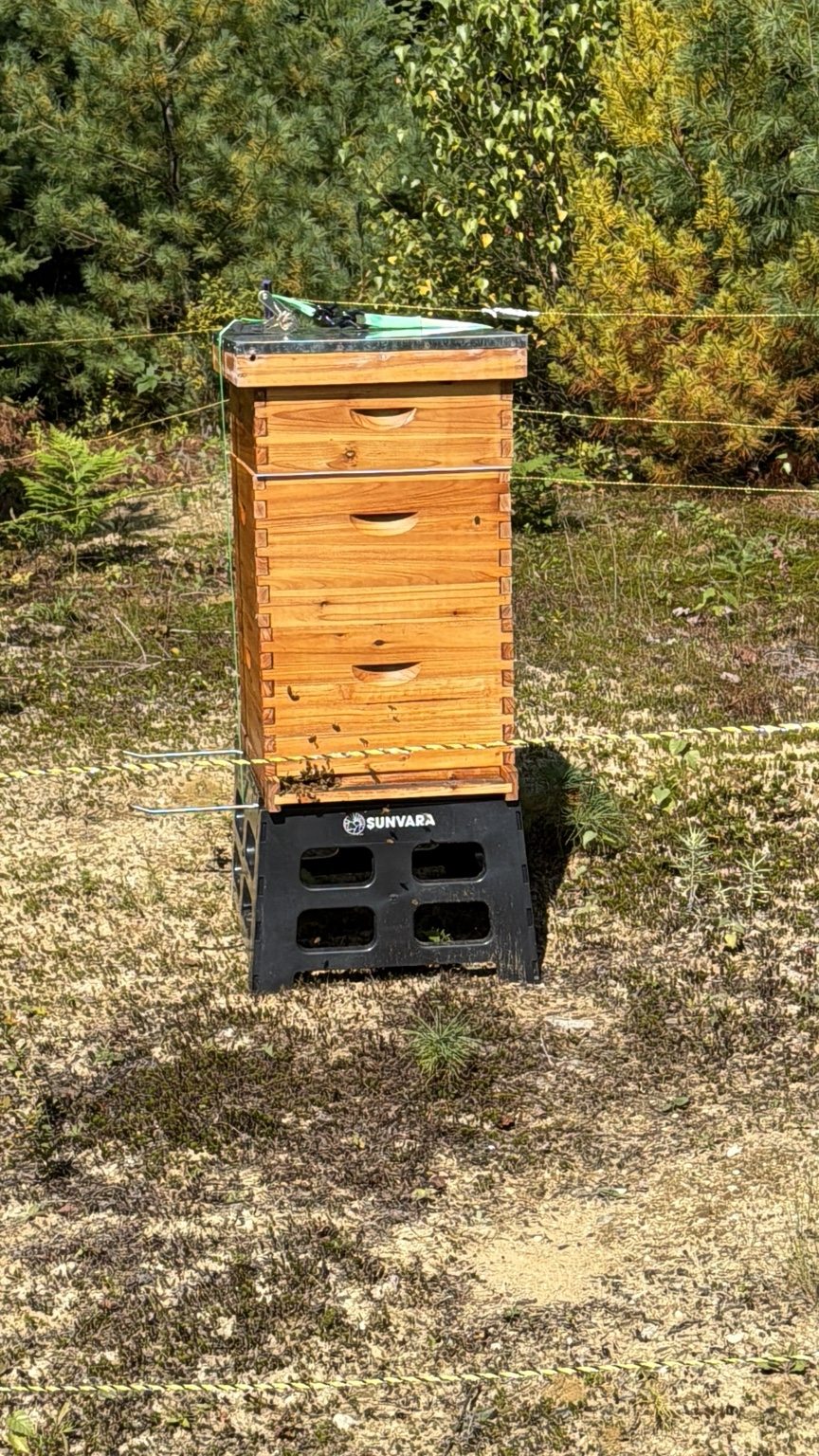
We began keeping North Country honey bees in April with two hives, and I keep finding reasons to stop and watch them. It’s easy to think of bees as little flying honey factories. They’re much more interesting than that.
Here are five things worth knowing, whether you keep bees yourself or just enjoy seeing them around the garden.
1. Honey bees can give directions
When a forager finds a useful food source, she can perform a waggle dance inside the hive. The movement communicates information about the direction and distance of the food relative to the sun. It’s one of the remarkable examples of animal communication.
2. A worker doesn’t have just one job forever
Worker bees take on different tasks as they age and as the colony needs change. Younger bees often tend brood or work inside the hive; older workers are commonly the ones you see foraging. Nature is more flexible than a strict job chart, though.
3. Honey is the colony’s food
We enjoy honey in tea, recipes, and bottles on the shelf, but bees make it to feed themselves. That stored energy is especially important when flowering plants aren’t available.
4. Honey bee colonies don’t simply vanish each winter
Unlike many insects that don’t survive the cold as adults, a honey bee colony can overwinter together. The bees form a cluster, eat stored honey, and generate heat. Colony strength, disease management, moisture, and available food all affect survival.
5. Swarming is part of colony reproduction
A swarm can look alarming, but it’s a normal way colonies multiply. A queen leaves with a group of workers, and the swarm may temporarily gather on a branch while scout bees search for a new home. University of Minnesota Extension has a helpful overview.
Bees still deserve respect and a little distance, especially for anyone allergic to stings. If you find a swarm in an unsafe location, contact an experienced local beekeeper rather than trying to handle it yourself.
The more I learn, the more I appreciate the quiet industry going on behind those hive entrances.